
Stateless Content Revision Engine
Fresh context on every revision, zero rule decay.
Challenges
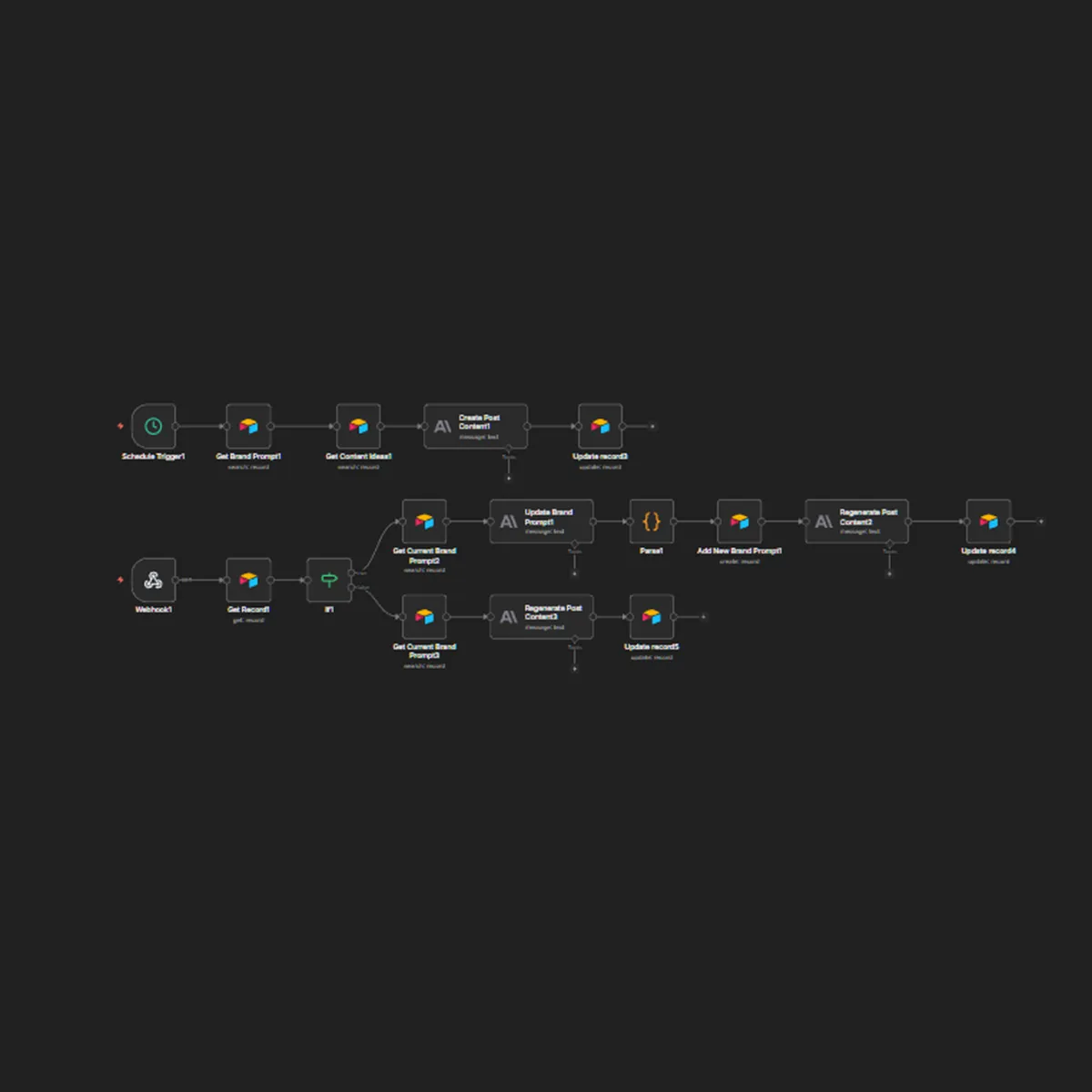
Teams iterating content with ChatGPT see rules silently degrade after multiple feedback rounds. Brand voice, compliance constraints, and formatting instructions get overwritten as conversations grow. This forces manual policing, rework, and inconsistent outputs across posts and campaigns.
Solution
This automation makes every generation stateless by rebuilding the prompt from source-of-truth guidelines on each API call. Brand voice lives in versioned storage, while per-post feedback is applied independently or merged into the guideline when approved. Every revision starts with a clean context window, ensuring rules are enforced consistently.
Impact
Content quality stabilizes across iterations, even with heavy feedback cycles. Teams regain control over brand voice without prompt micromanagement or drift. Review time drops, consistency rises, and AI becomes reliable for production workflows instead of one-off drafts.
Sales Call Proposal RAG Engine
Turn call transcripts into branded proposals automatically.
Challenges
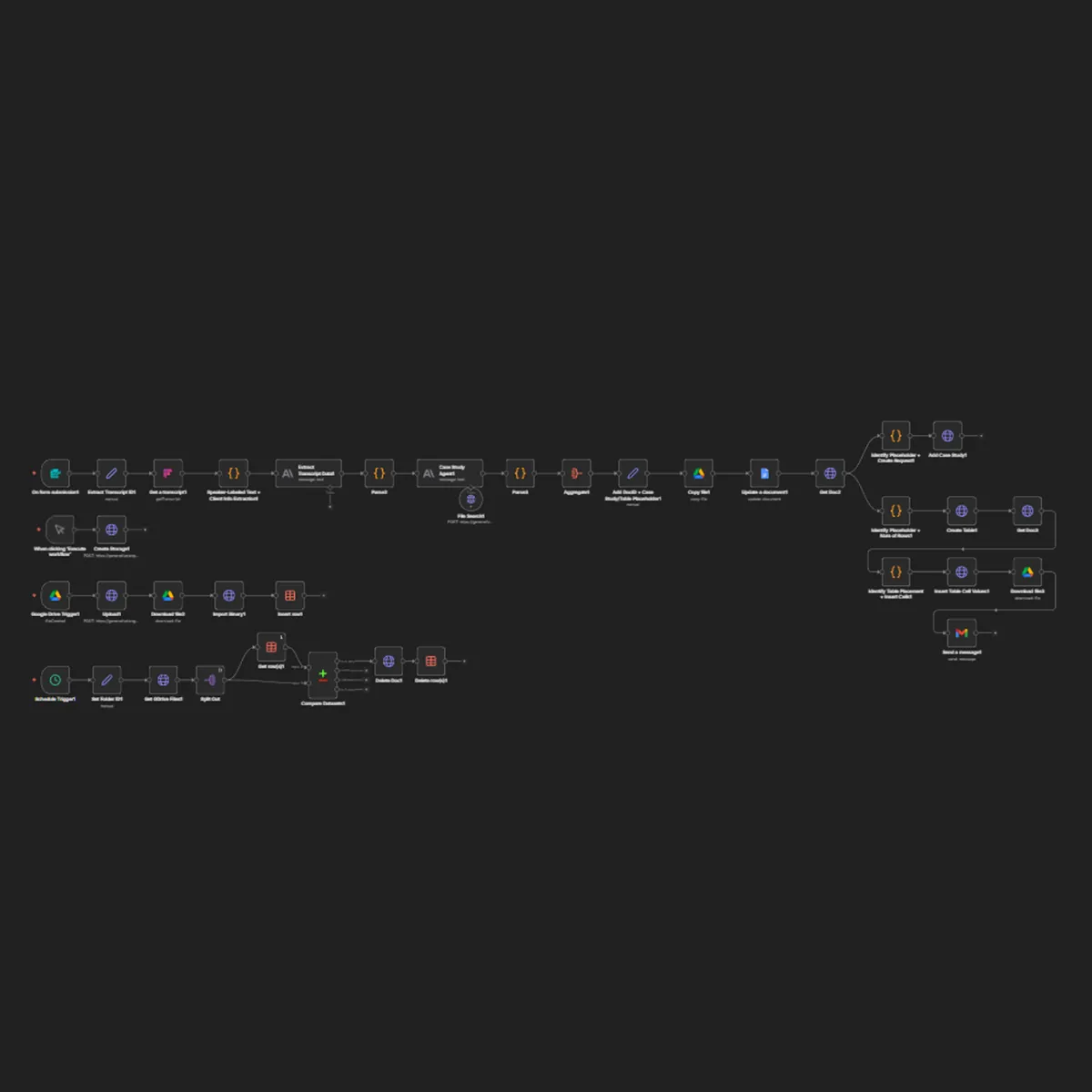
Sales teams lose time rewriting similar proposals from scratch after every call, and key details from the conversation often get dropped or misremembered. Proposals end up living in random Google Docs with inconsistent structure and branding. Case studies are rarely attached in a targeted way because nobody has time to search through a full folder of past work. This leads to slower turnaround, weaker positioning, and lower perceived professionalism.
Solution
This workflow ingests a Fireflies sales call transcript and uses an LLM to extract all proposal-critical fields into a strict JSON schema. It then copies your existing Google Docs proposal template, replaces placeholders with transcript-derived content, and auto-builds a deliverables table from what was actually promised. In parallel, a Gemini File Search RAG agent scans your case study folder and inserts the most relevant examples directly into the proposal, styled to match your document. The output is a ready-to-send proposal that follows your exact brand, layout, and language patterns.
Impact
Proposal creation time drop from hours to minutes, freeing founders and senior strategists from repetitive document work. Every prospect receives a proposal that is tightly aligned with what was discussed on the call, reducing misunderstanding and increasing close rates. Case studies become systematically attached and tailored, reinforcing credibility without extra manual effort. Over time, this creates a repeatable, scalable proposal engine that keeps quality high even as lead volume and team size grow.
LLM Council Consensus Engine
Multi-model answers, one trusted output.
Challenges
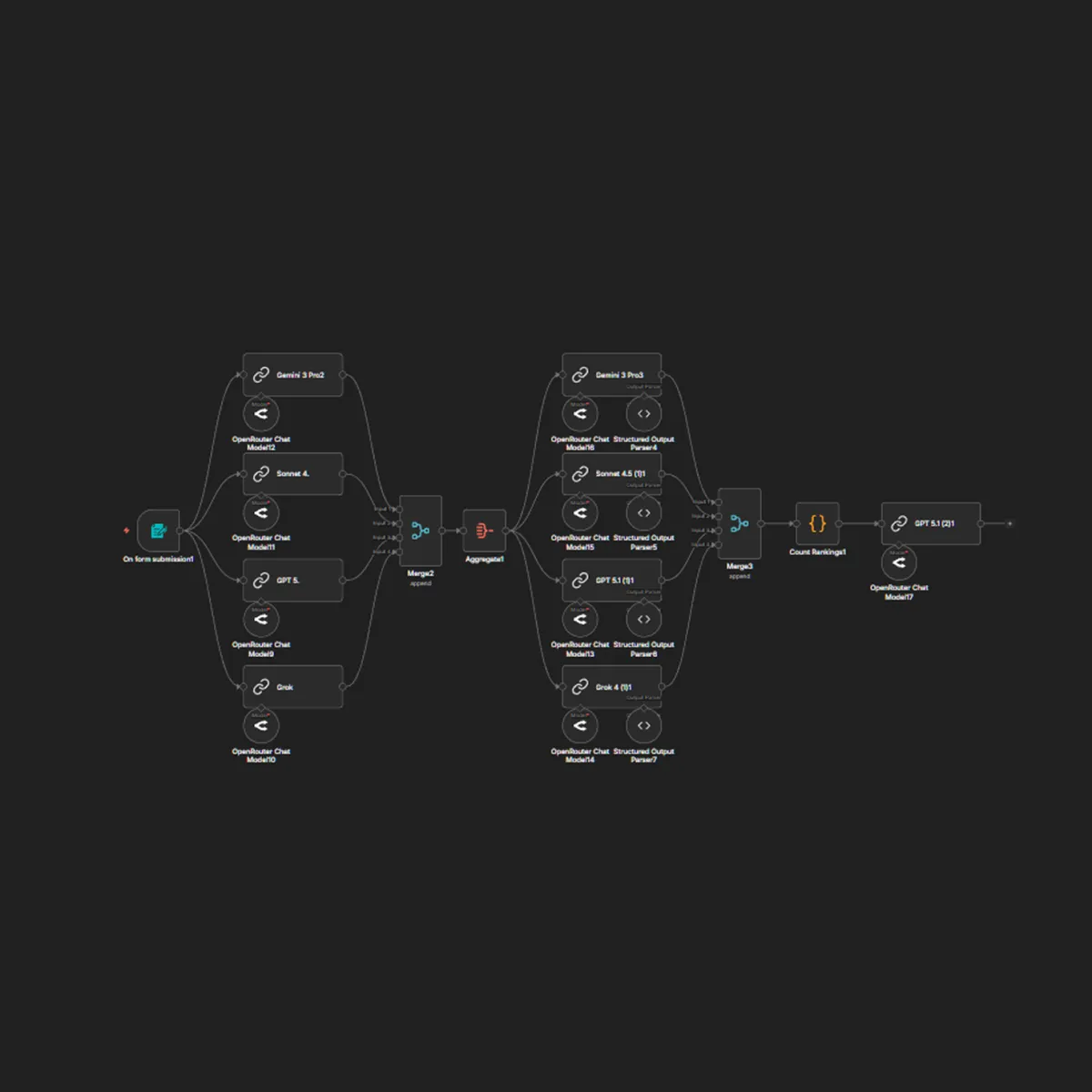
Businesses rely on single-model responses that can hallucinate, disagree with reality, or confidently output nonsense. Leaders have no reliable way to validate whether an answer is genuinely robust or just wrong. This makes AI risky for strategic financial, and operational decisions.
Solution
This workflow sends your questions to multiple LLMs, forces them to independently respond, then evaluates and ranks their answers. Each model then peer-reviews the others, and a final "chairman" model synthesizes the strongest shared logic and insights. Instead of guessing, you get a weighted, consensus-driven answer backed by independent reasoning.
Impact
Decision-makers get answers grounded in agreement, not hope or blind trust. Teams reduce the risk of hallucination-driven decisions and gain a more reliable AI advisory layer. AI becomes a structured, defensible decision tool instead of a single-model gamble.
n8n MCP Client Brief Generator
Use n8n MCP to give ChatGPT live client context.

Challenges
Agency owners waste time manually piecing together client context from ClickUp tasks, comments, and email threads before meetings. Important details get missed, and prep quality depends on memory and last-minute skimming.
Solution
This n8n workflow uses n8n MCP to give ChatGPT direct access to live ClickUp tasks, comments, and Gmail conversations, turning it into a context-aware team member. Instead of prompting blindly, you can now discuss the client with ChatGPT as if it already knows the account, history, and current state.
Impact
ChatGPT becomes part of the delivery team, not just a writing tool, enabling better thinking, faster decisions, and higher-quality conversations. Client prep becomes collaborative, strategic, and instant, reducing mental load while improving meeting outcomes.
Gemini File Search RAG
Simple RAG automation without the technical setup.
Challenges
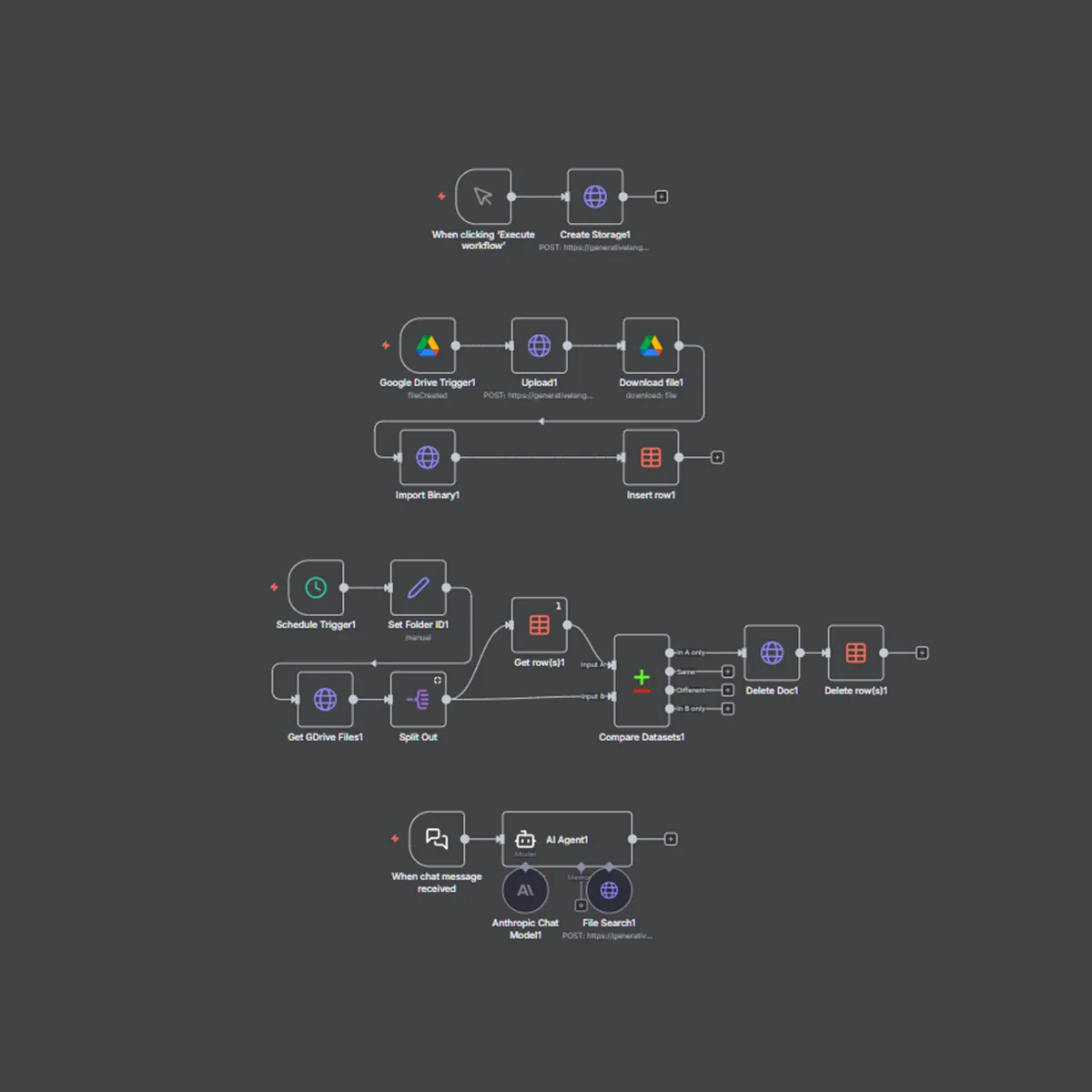
Most teams want RAG but don't have the technical skills or time to build pipelines or manage embeddings. Maintaining manual uploads and syncing files is slow and error-prone.
Solution
The automation uses Gemini File Search and n8n to create an easy two-way sync between Google Drive and the cloud storage, removing all technical complexity. It delivers RAG functionality without needing to build any embeddings or vector database systems.
Impact
Teams get RAG-level accuracy with almost no setup time, saving hours each week. It makes advanced retrieval accessible to non-technical users and keeps knowledge bases always up to date.
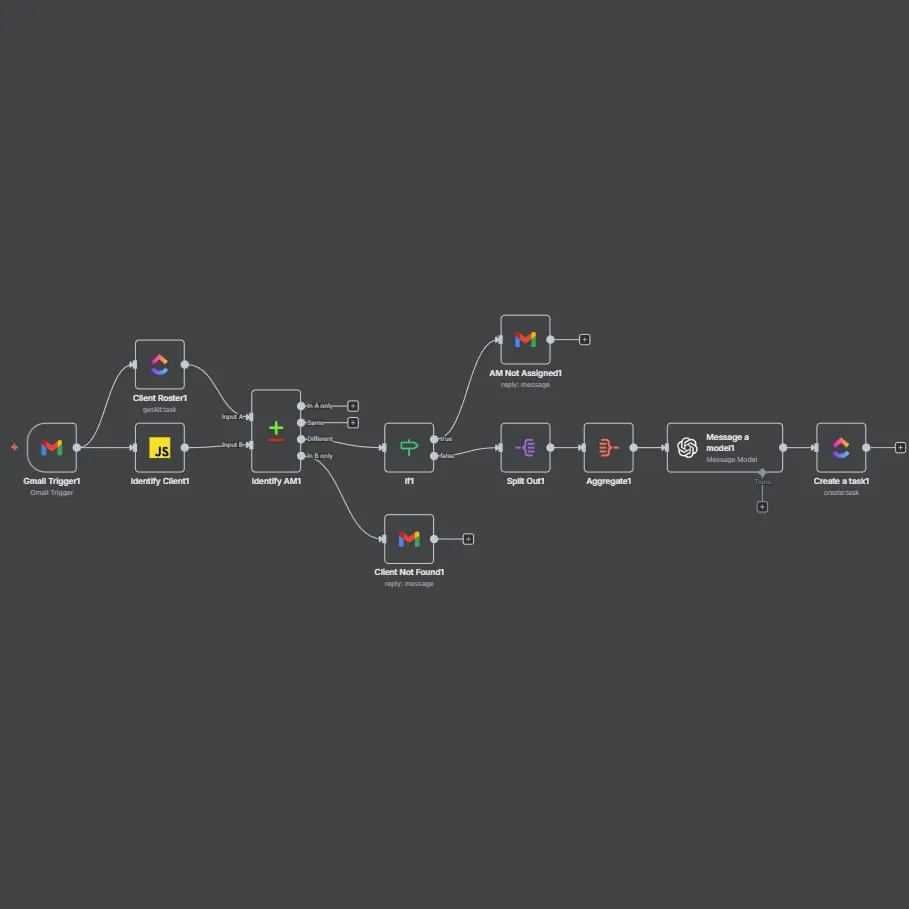
Email-to-ClickUp Task Router
Turn forwarded client emails into structured ClickUp tasks automatically
Challenges
Manual task handoffs between PMs and AMs get lost during busy days, causing missed deadlines, burnout, and unhappy clients.
Solution
An automation that turns forwarded client emails into structured tasks by identifying the client, assigning the right AM, extracting task details with an LLM, and handling edge cases automatically.
Impact
Tasks get created instantly, reducing human error, protecting team capacity, and improving client responsiveness.
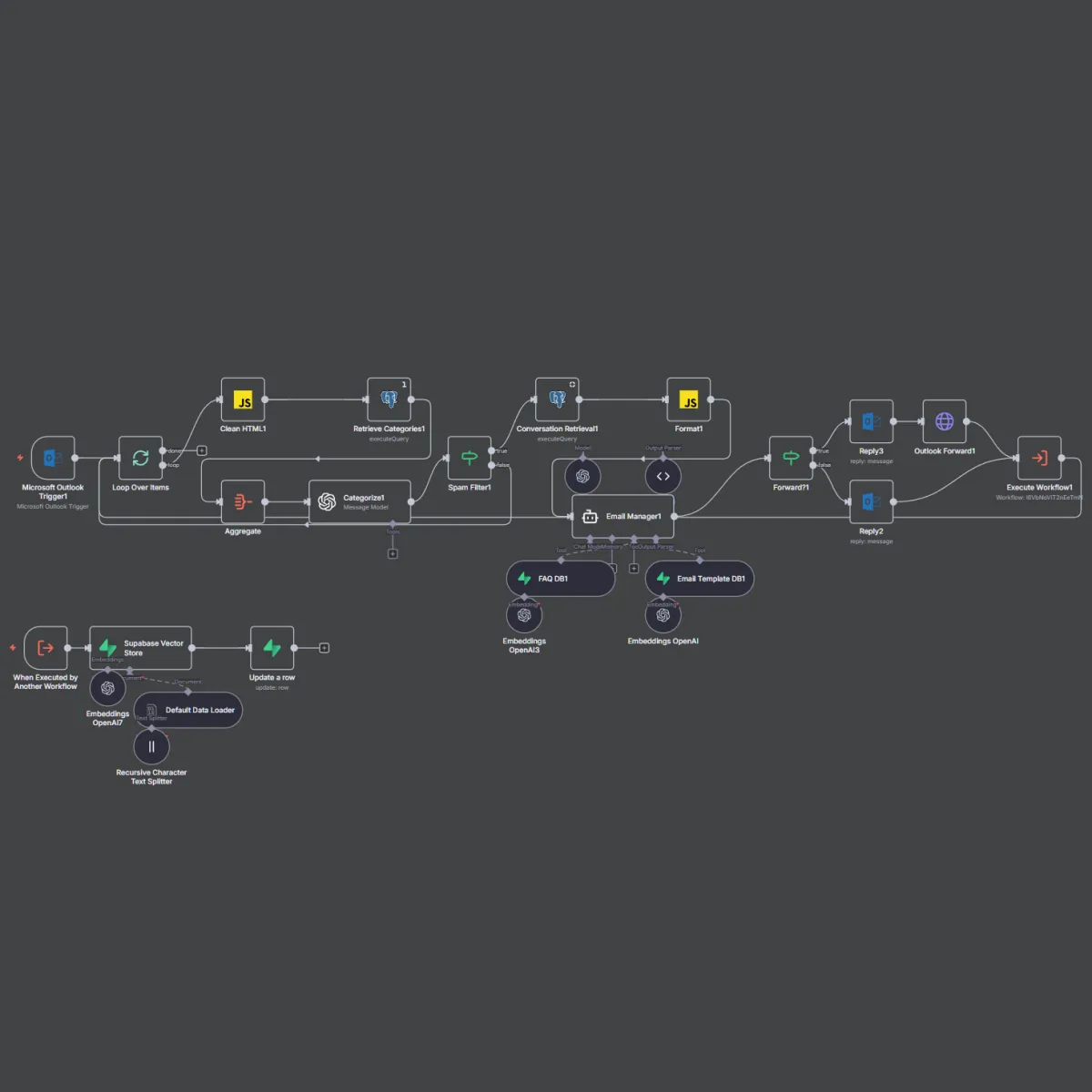
RAG Email Responder
Ingests emails and responds using your internal knowledge
Challenges
Businesses waste time manually answering repetitive questions, struggle to maintain consistent messaging across agents, and risk sending inaccurate replies when staff are overwhelmed.
Solution
This automation reads incoming emails, searches your FAQ or knowledge base using an AI agent, and automatically delivers accurate responses when a match exists. If the AI can’t find a reliable answer, it escalates the email to a human while preserving full context.
Impact
Support teams save hours each week, response times drop significantly, and customers receive consistent, policy-aligned answers. The business gains a scalable support system that improves accuracy, reduces workload, and keeps inboxes under control.
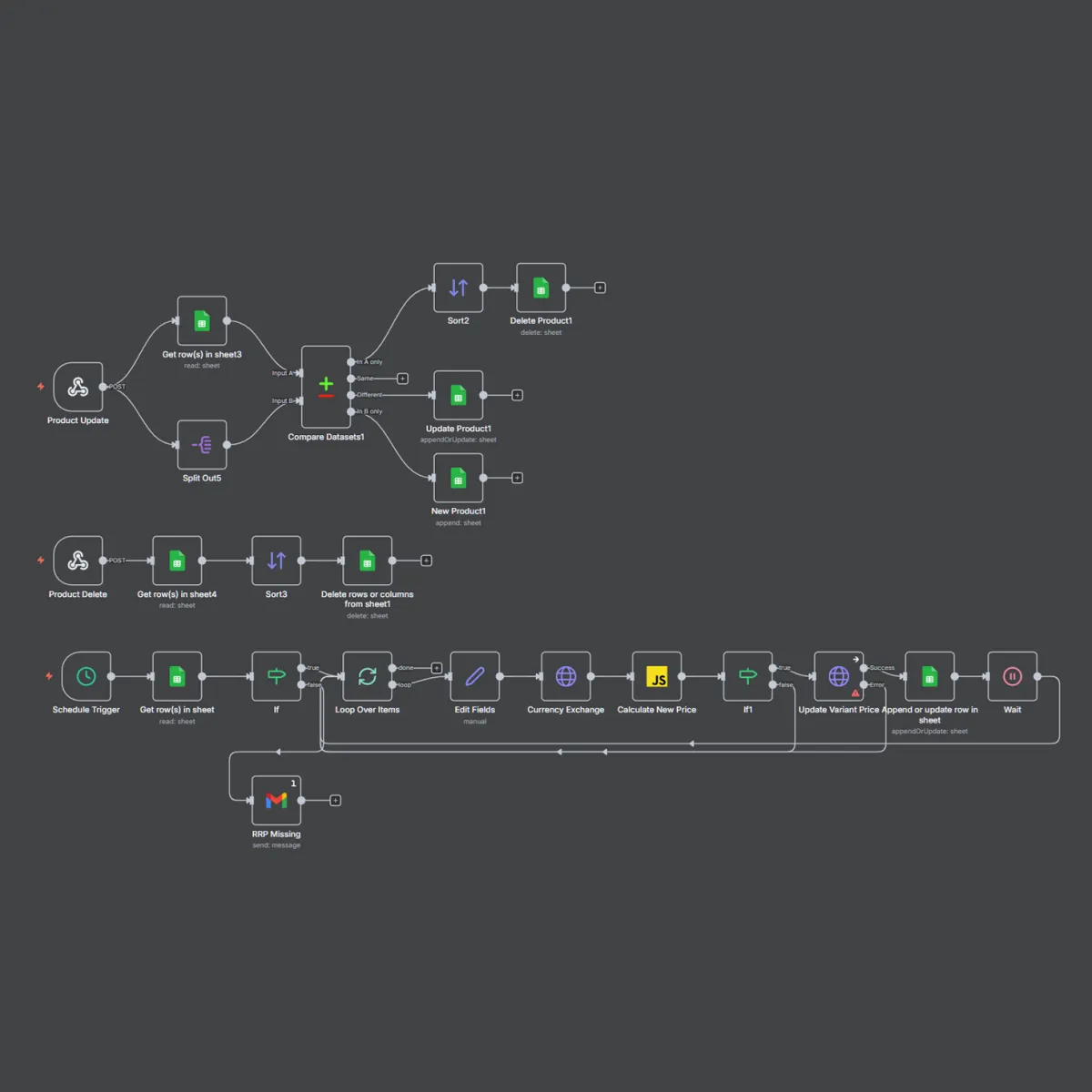
Shopify RRP Price Sync
Real-time RRP-based pricing sync for Shopify.
Challenges
Marketplace stores lose margin when currency rates shift and prices aren’t updated fast enough. Manually tracking new, changed, or deleted products also creates inconsistencies and errors.
Solution
This workflow recalculates product pricing using the latest exchange rates, updates Shopify variants automatically, and keeps a synced Google Sheet as the source of truth. It also flags missing RRPs or currency codes to prevent incorrect pricing.
Impact
Pricing stays accurate and margins remain protected without any manual oversight. Most stores save 5–10 hours per week by eliminating daily checks, spreadsheet updates, and manual Shopify edits, while keeping their entire catalog reliably aligned with supplier RRPs.
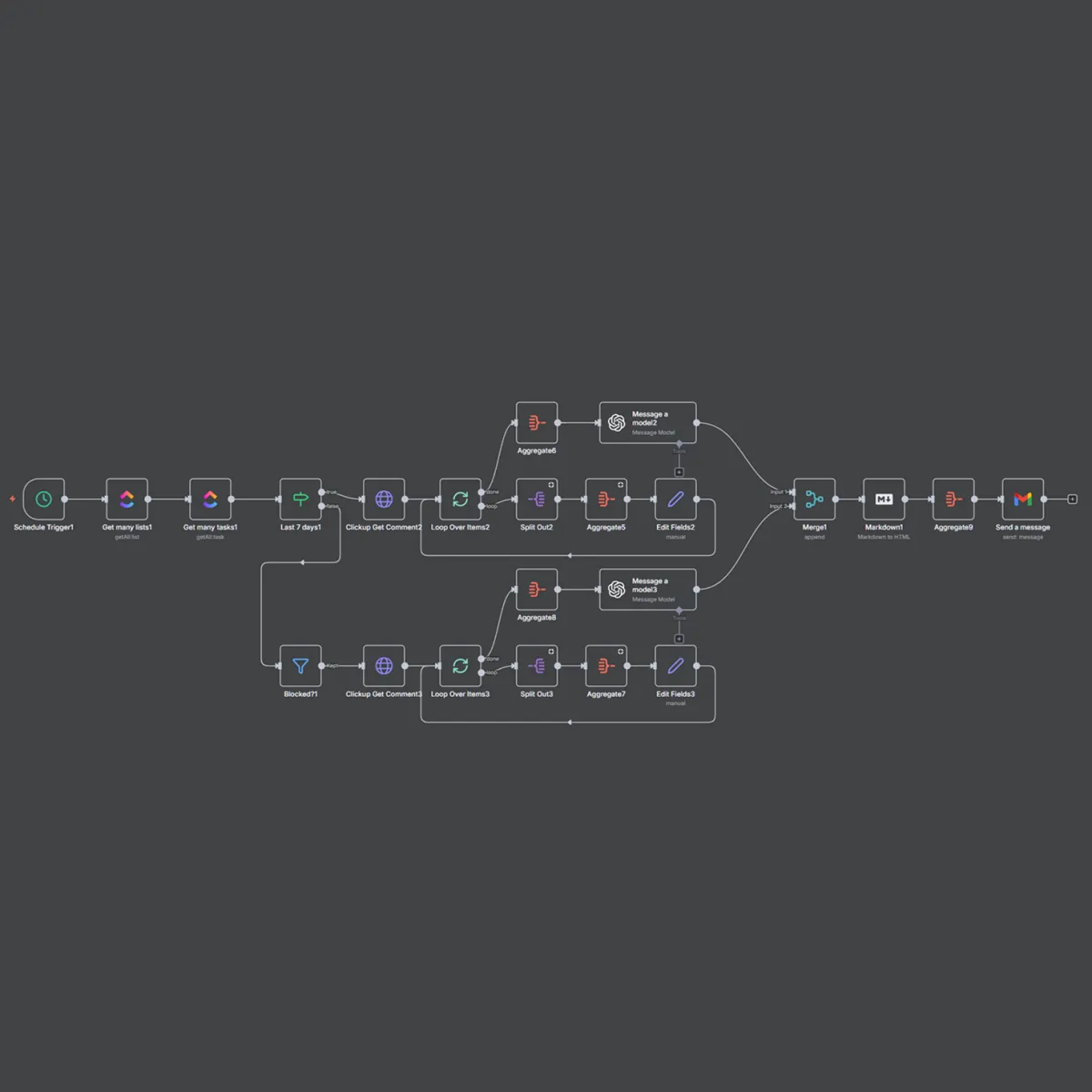
Clickup Weekly Digest
Clear weekly visibility for tasks, risks, and blockers.
Challenges
Managers often lose track of what was completed, what’s at risk, and which tasks are being delayed. Reviewing every ClickUp list manually takes time and makes it easy to miss overdue, stalled, or blocked work.
Solution
It pulls all tasks from the past week, analyzes progress, highlights risks, and surfaces blockers that need attention. It then compiles everything into a clean weekly digest with summaries and recommended actions.
Impact
This gives project managers a fast overview that improves decision-making and reduces blind spots. It saves roughly 2–3 hours per week that would otherwise be spent digging through ClickUp and preparing updates manually.


